Prefabricated Concrete Panels Bring Light, Texture, and Legacy

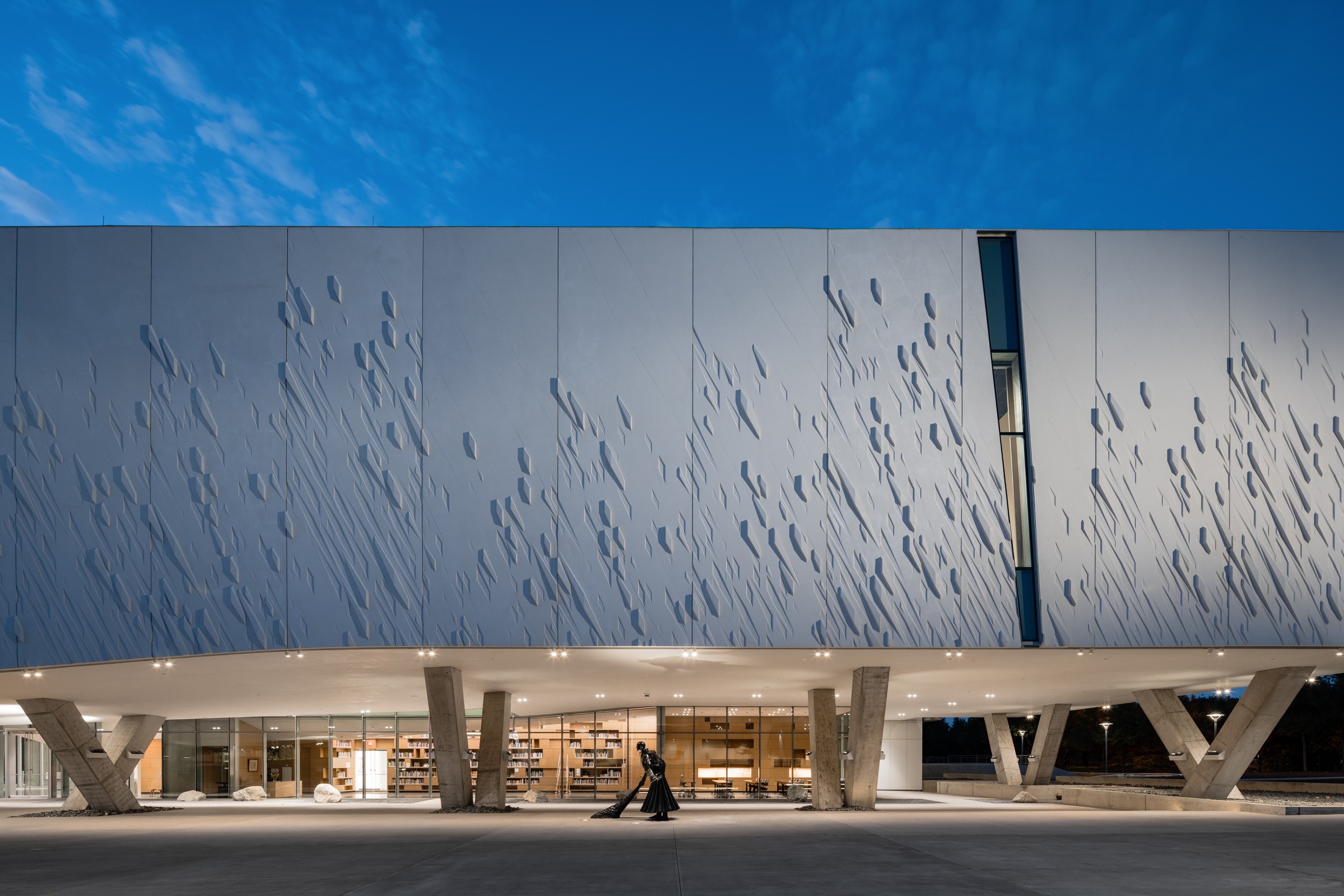
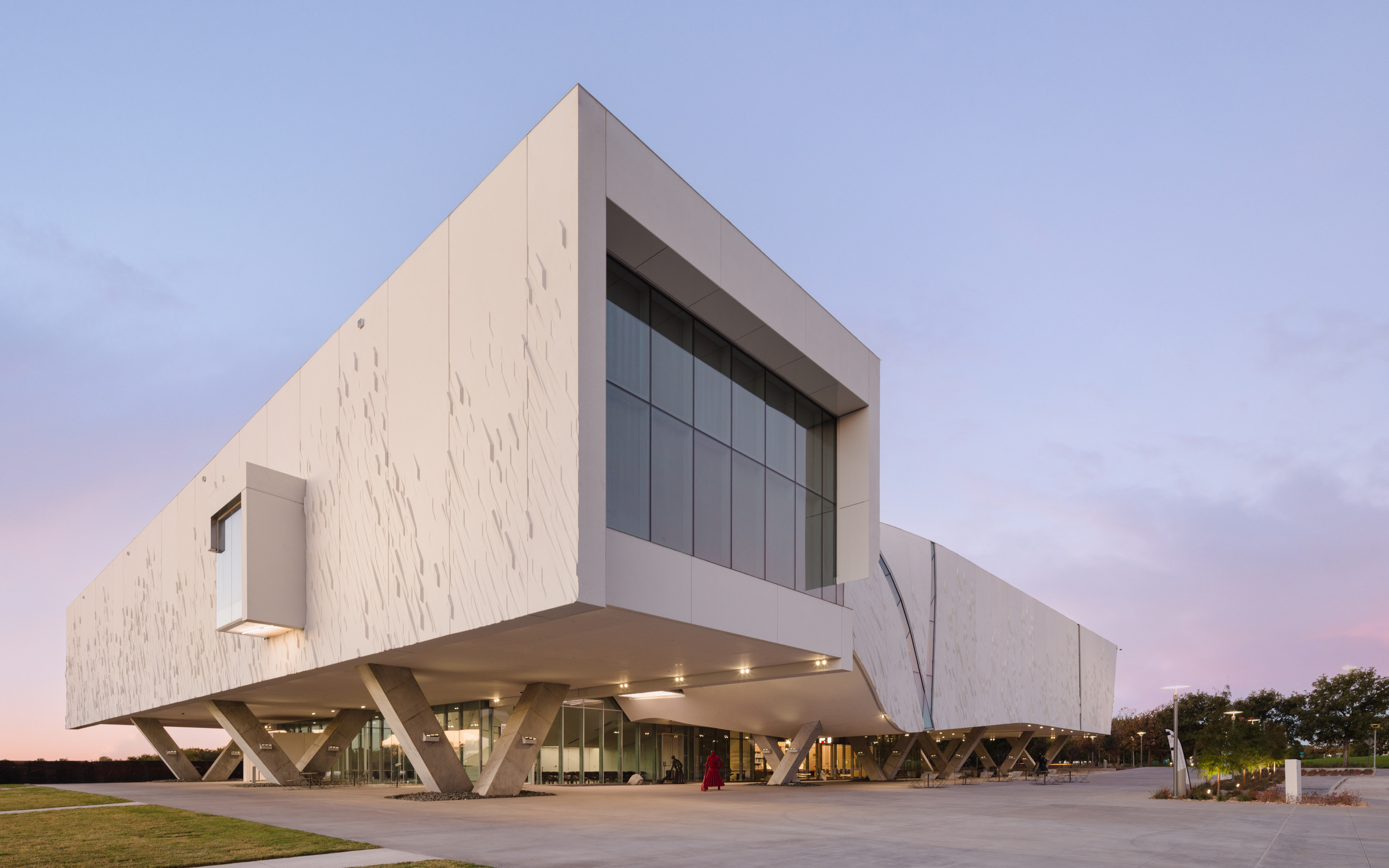
Part of the new 12-acre Edith and Peter O’Donnell Jr. Athenaeum on the University of Texas at Dallas campus, the Crow Museum of Asian Art established the foundation for a cultural district that includes three major facilities. As the first to be constructed and the largest of the three, the museum expands the reach of the Crow Museum’s legacy from its original Dallas Arts District location, creating a second home for its growing collection and community programs.

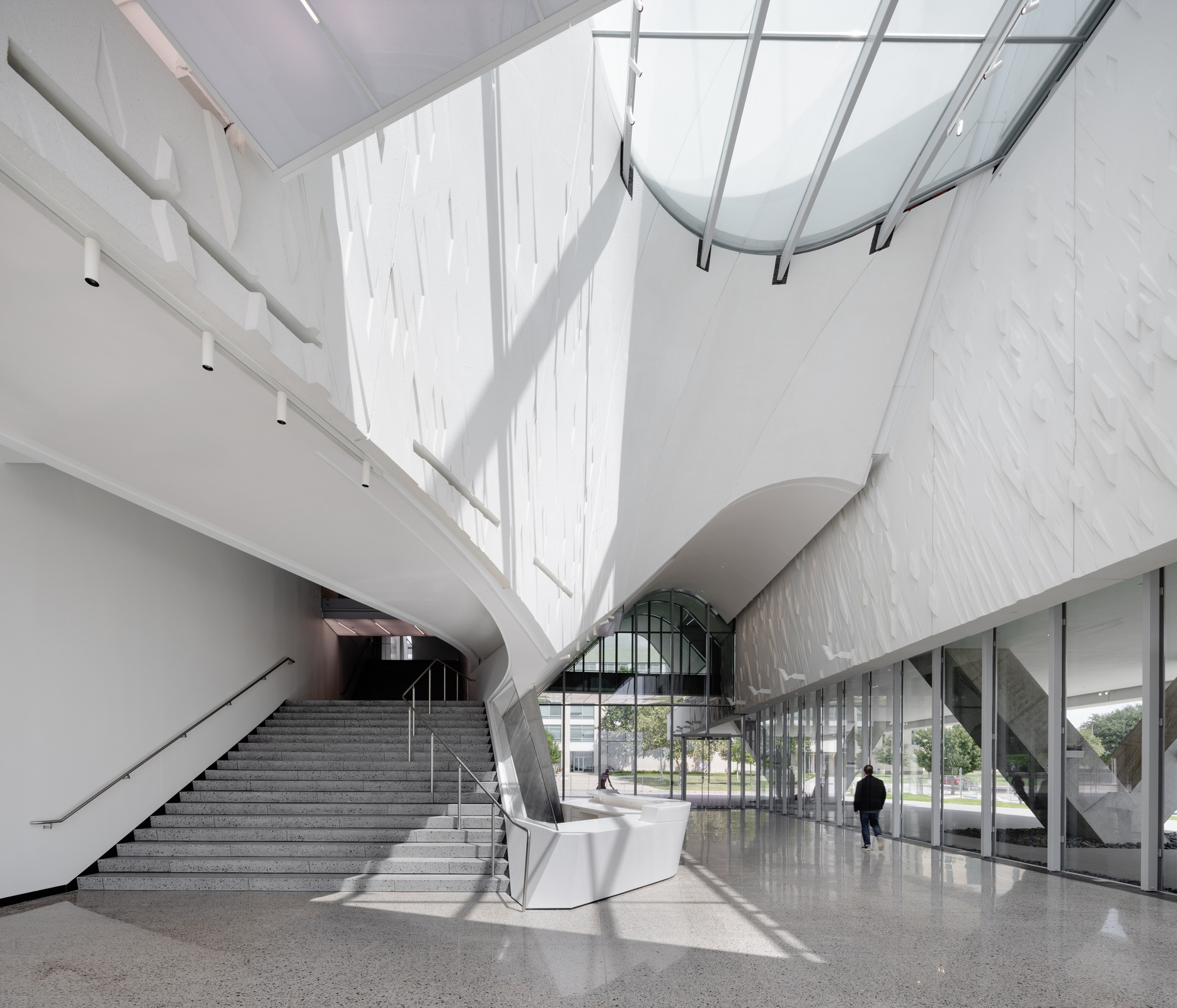
Spanning nearly 60,000 sq ft, the two-story museum includes expansive exhibition galleries, a conservation lab, reading and seminar rooms, offices, and collection storage — all designed to support the study, preservation, and celebration of Asian art and culture. Large windows at the ends of the galleries fill the interiors with natural light, complementing the architectural precast concrete panels and enhancing both the artwork and the visitor experience.

license

2026 PCI Design Award: Best Government & Public Building + BIM Award

license

2024 PCMA Best of Precast: Best Architectural

Year
2024
Size
75,555 sq ft
Building Systems
Architectural
Design Features
Architectural Features, Complex Shapes, Sandblast

The building envelope combines glass with 163 three-dimensional architectural precast panels, forming a textured pattern that is “both logical and repetitive,” as developed by Morphosis. Each panel was manufactured using 100% white cement blended with white aggregate and finished with a medium sandblast to reveal a subtle shimmer across the surface. Wells provided “a cost-effective solution that requires virtually no maintenance while ensuring efficient assembly,” while also allowing three-dimensional sculpting that enhances the building’s massing, moods, and the overall visitor experience.

Wells was engaged early in the design process, providing real-time feedback on constructability and cost. Arne Emerson, partner at Morphosis, explained, “By embracing our construction and fabrication partners early in the design process, we’re able to receive real-time feedback on constructability and cost, which optimizes the design and construction process.” This collaboration ensured that the museum’s complex geometry could be realized efficiently, with panels ranging from flat to highly dimensional shapes. Only about half of the panels were installed in traditional configurations, demonstrating the flexibility of prefabricated concrete to support intricate architectural forms.

Advanced modeling and digital fabrication — including Rhino-generated CNC foam molds — were used to coordinate the variation in panel shapes and jointing among Wells, Morphosis, The Beck Group, and Datum Rios. The result is a museum that “plays with light and shadows” and showcases not only the art on display but the architectural panels themselves, which add an abundance of texture and serve as a work of art in their own right.

The Crow Museum of Asian Art stands as both a vessel for cultural experience and an architectural statement, connecting design innovation with lasting legacy at the heart of the UT Dallas campus.

Ready to transform your community?