Architecture That Reflects Courage and Honor

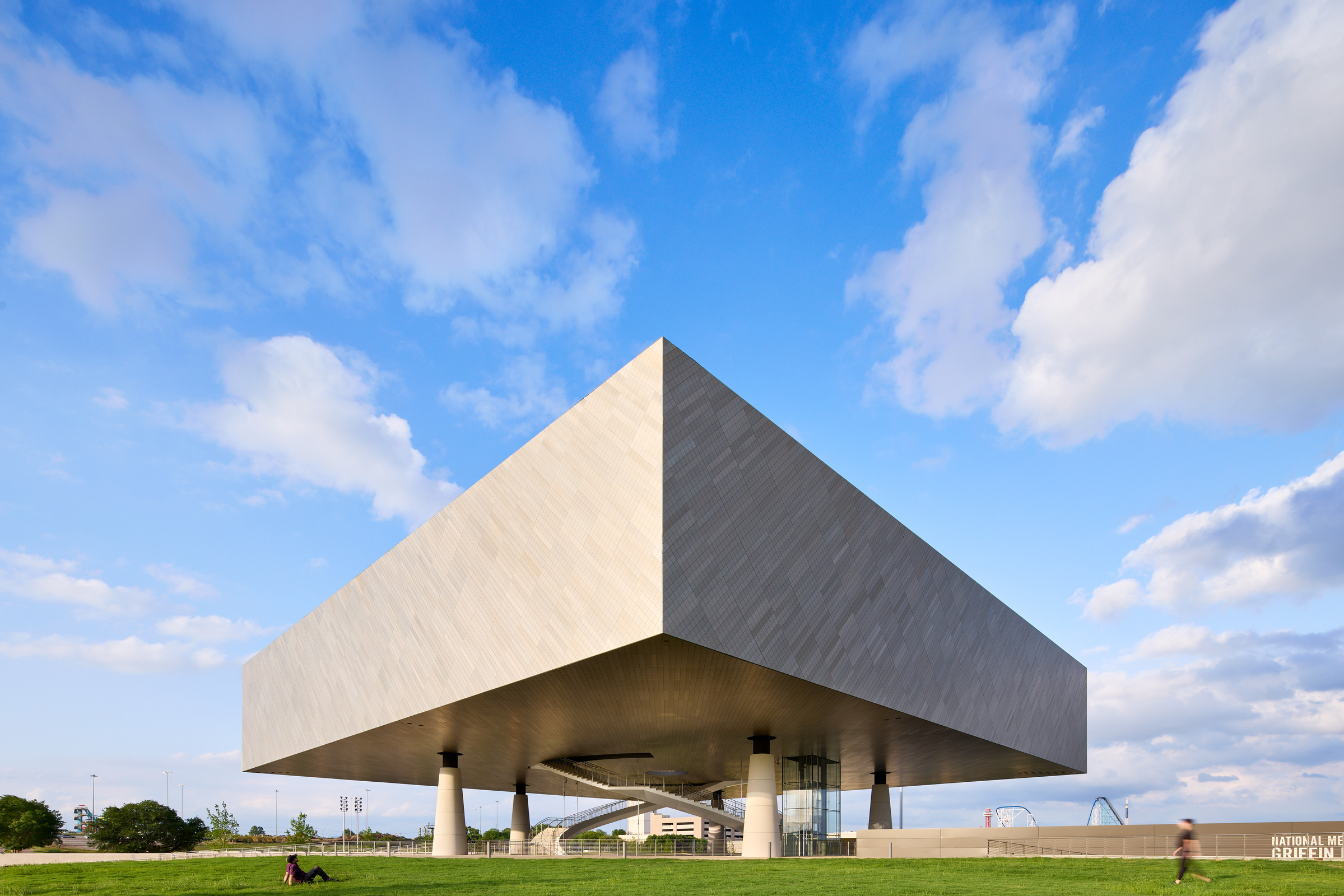
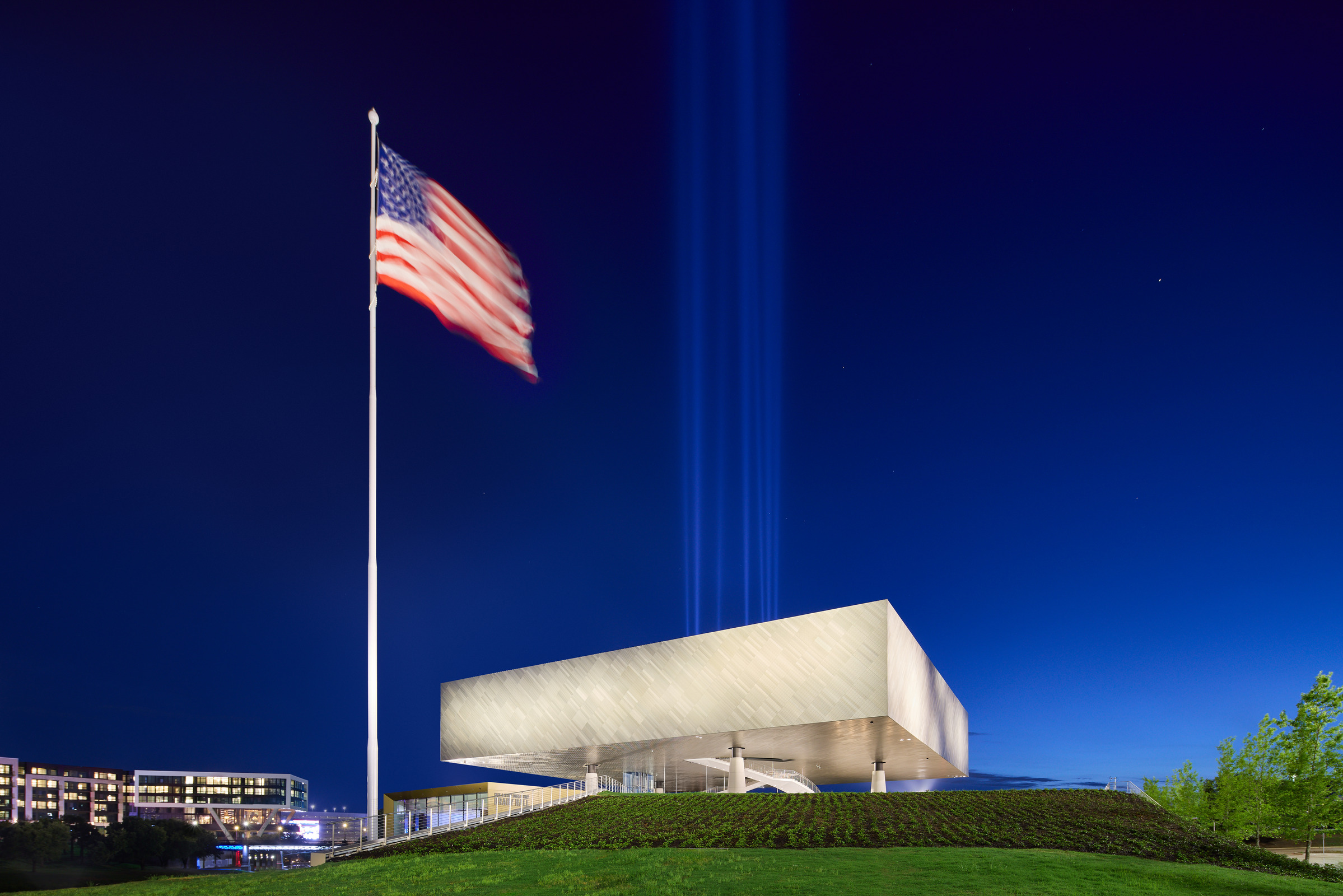
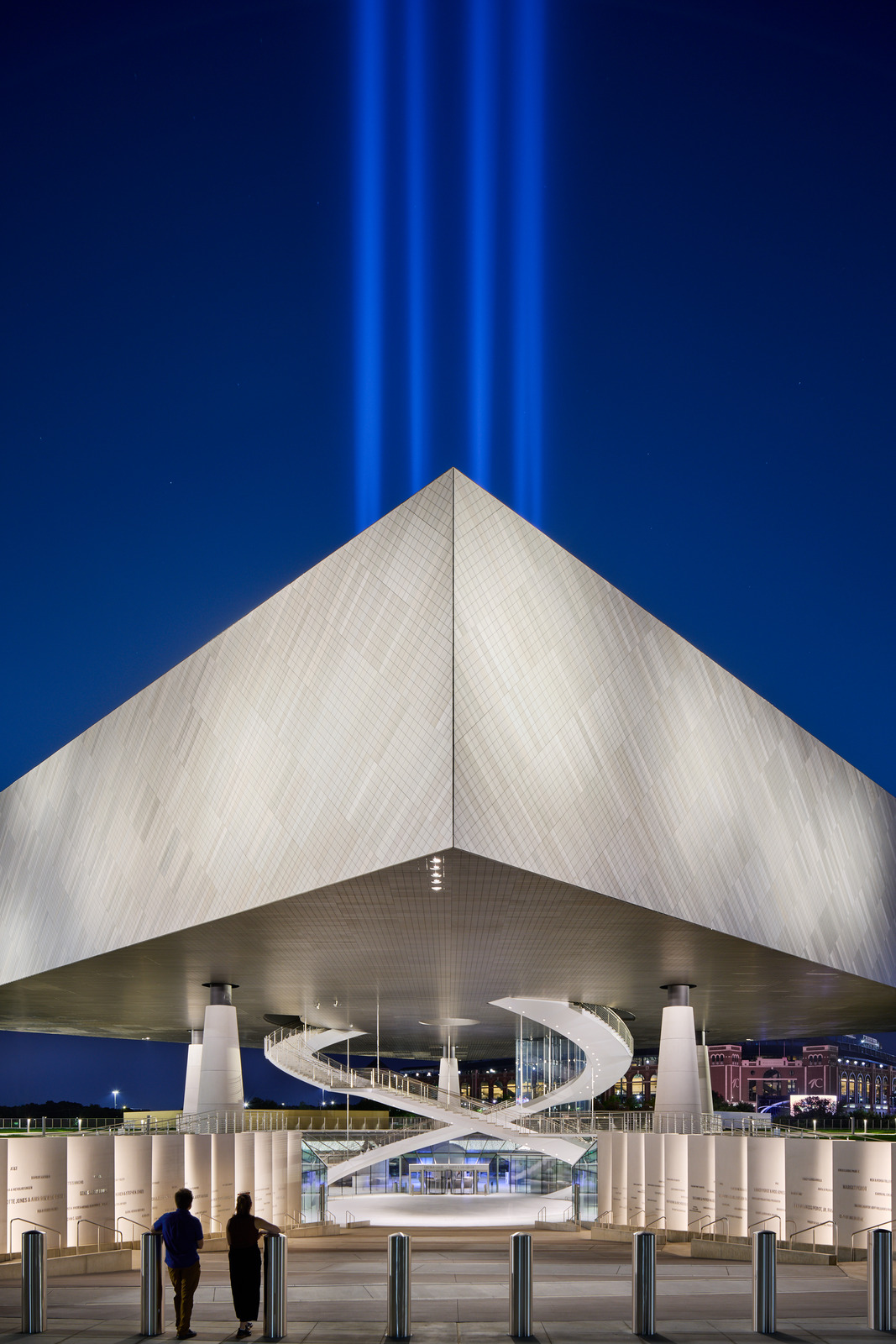
This national landmark in Arlington, TX, salutes America’s most decorated military heroes. The National Medal of Honor Museum is more than an inspiring tribute — it’s an architectural achievement grounded in the strength and precision of prefabricated concrete. With a bold form that seems to hover above the site, the 200 sq ft facility rests solely on five monumental precast columns, merging symbolism with performance. Wells engineered and delivered the segmental structural solution, transforming concept into a constructible reality.

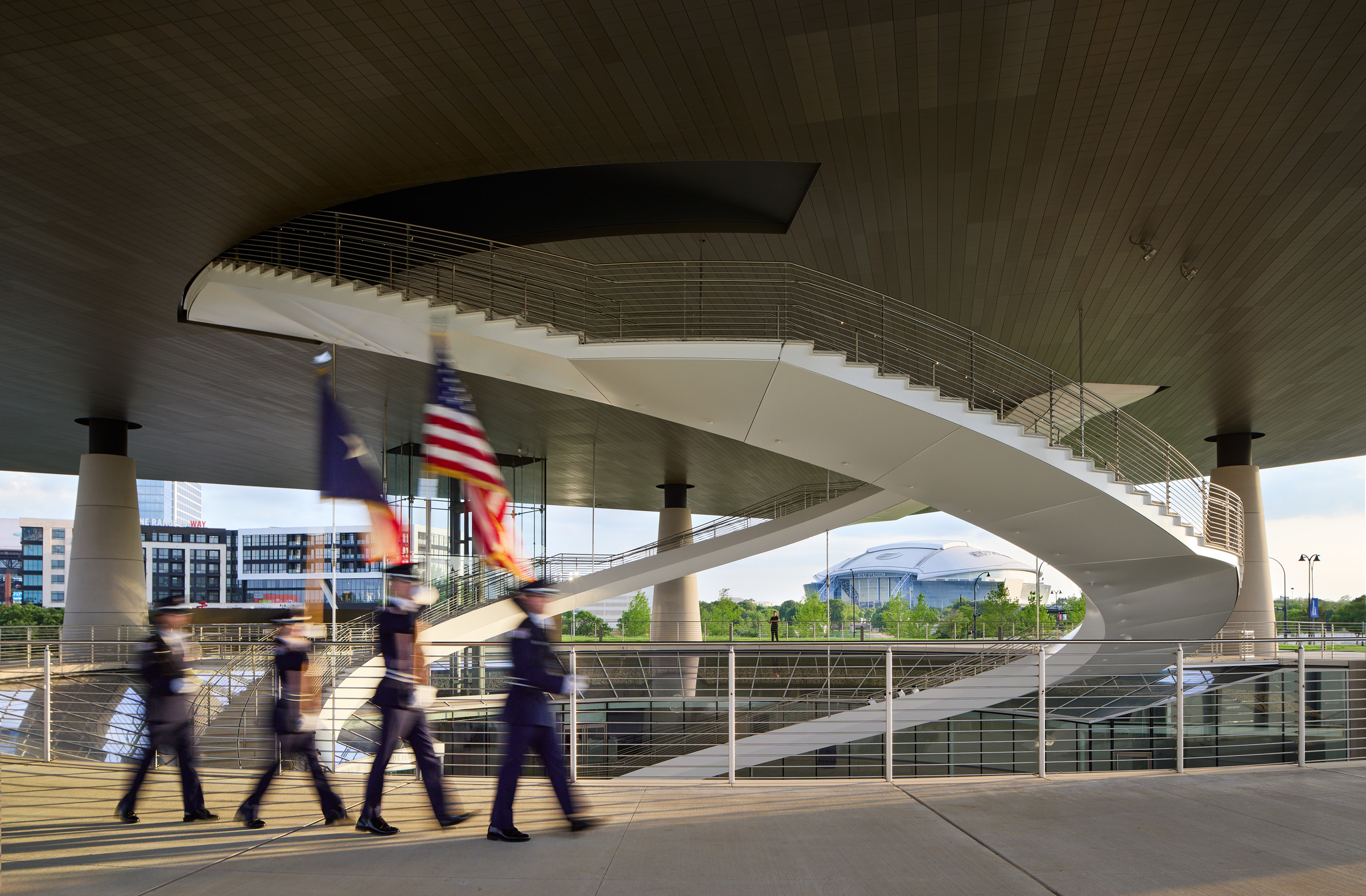
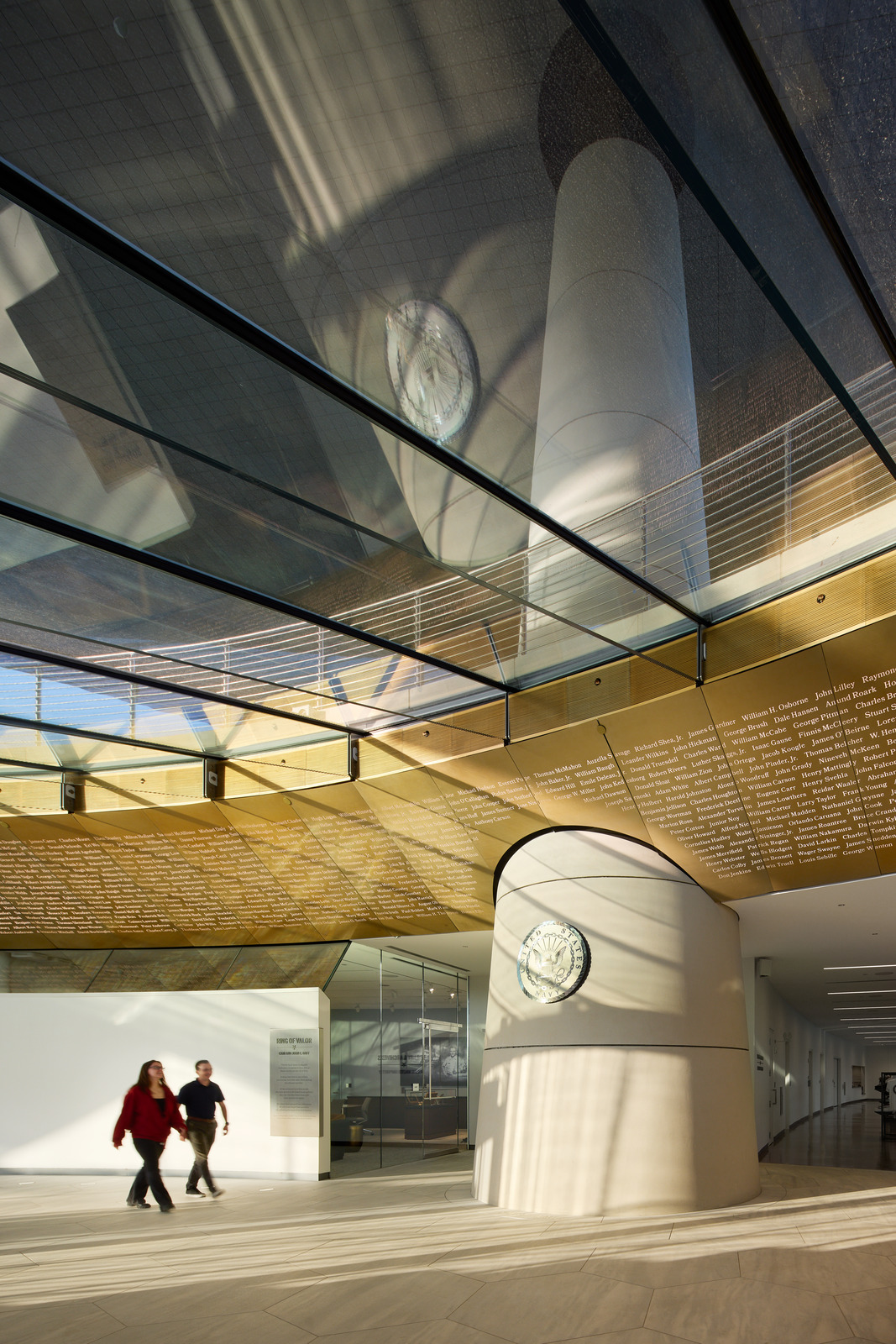
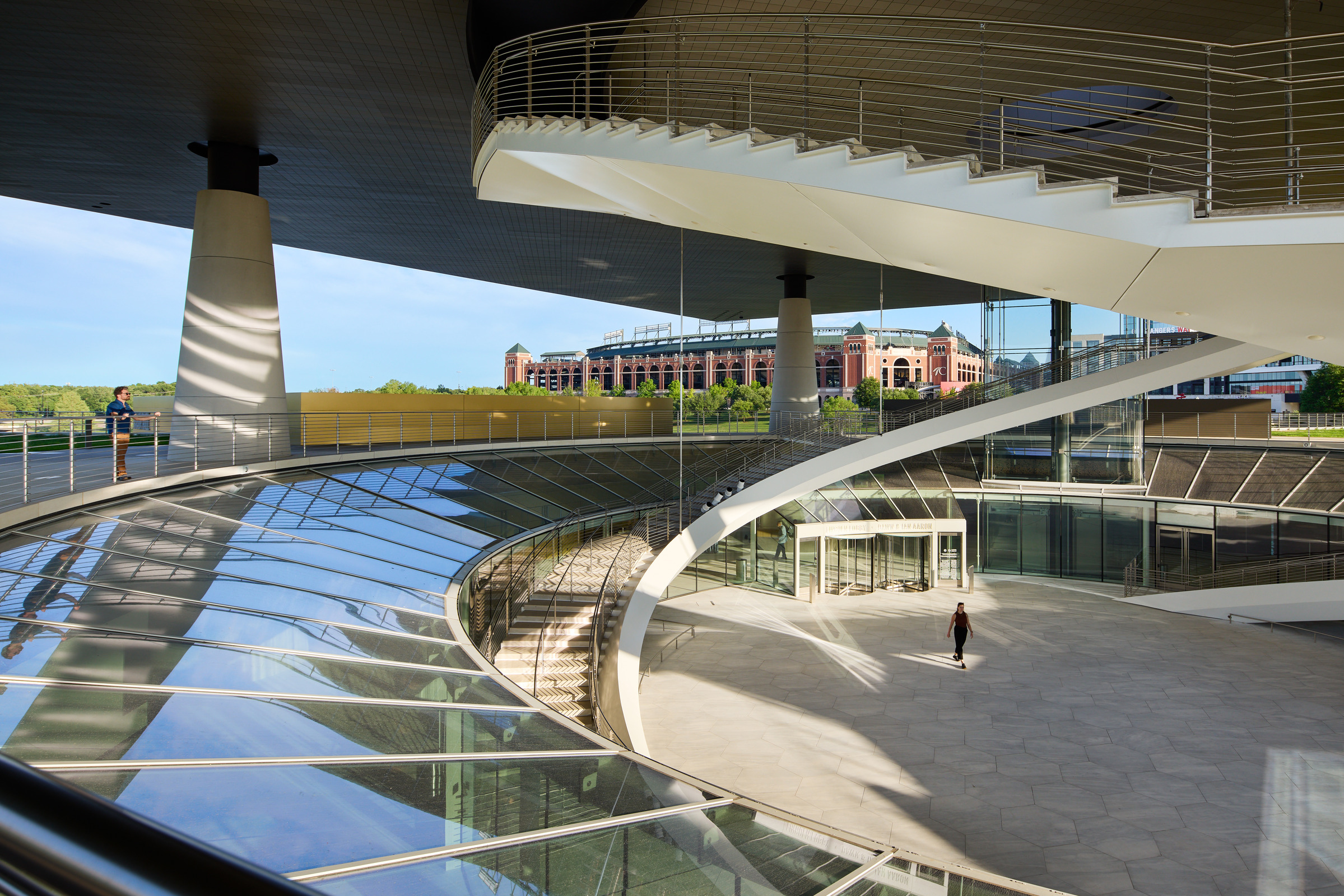
Each 40 ft column represents a branch of the U.S. military. Set in a star-shaped pattern that echoes the Medal of Honor, the columns taper from a base dimension of 12 ft. 4 in. to a 5-ft. width at the top. The profile feels lean and intentional, yet the exposed, hollow towers shoulder every demand placed on the building (dead, live, wind, and seismic) while doubling as vertical chases for mechanical and electrical systems.

license

2026 PCI Design Award: Best Custom Solution

license

2026 USA Today #1: Best New Museum

Year
2025
Size
102,000 sq ft
Building Systems
Architectural, Structural
Design Features
Acid Etch, Architectural Features, Complex Shapes

Engineering precision guided the final approach. Rather than a full-height monolith, the team adopted a modular ring strategy: seven tapered segments per column, each 6 ft tall. Reinforced with #11 bars and joined by grouted NMB sleeves, the stacked rings create a continuous system carrying axial loads up to 2,000 tons. This approach, developed by Wells, combined innovation with constructability. Match-casting, yard test fits, and tolerances tighter than 1/8 inch kept geometry true, and formwork was developed for every piece to match the taper.

Field execution demanded the same rigor. Using a 330-ton crane, crews set each ring to survey control, with Total Stations and data collectors verifying alignment. Tapered shims accommodated the slope at the ends, closing joints and preserving the clean, conical geometry from base to crown. Utilities were preassembled, then routed vertically through the columns to minimize disruption. Discreet 2- x 3-ft. access doors at each column base provide entry for maintenance.

Early collaboration under a design-assist model was critical. Wells worked alongside project principals from schematic design through detailing, using BIM to coordinate embeds, tolerances, rigging points, and pathways before a single form was built. Front-loaded coordination reduced rework, allowed shop drawings to drive field sequencing, and supported just-in-time delivery to a space-constrained site.

Prefabricated concrete outperformed cast-in-place alternatives in quality, precision, and speed, while enabling an integrated system. Wells delivered repeatable finishes and dimensional accuracy, while parallel workflows shortened the project schedule and reduced site impacts.

Sustainability was addressed through material efficiency, reduced waste, and the inherent durability of prefabricated concrete. The project leveraged efficiency and exuded resilience: optimized sequencing and a robust, low-maintenance envelope that will perform for generations. Just as important, prefabrication limited on-site congestion, an operational benefit that aligned with safety and community considerations.

Life-cycle performance factored heavily into decision-making. Prefabricated concrete’s mass, fire resistance, and durability support long service life with modest maintenance. Facility-controlled finishes resist weathering and impact at ground level, while the columns’ integrated access doors simplify inspections of the vertical utility distribution within the hollow cores. With fewer wet trades on site and a clean, repeatable installation sequence, the project limited noise, dust, and traffic — benefits felt by neighbors and crews alike. Safety was reinforced by simplifying logistics and shortening exposure to elevated work.

Wells understood the responsibility of building a national place of remembrance. At our Hillsboro, TX, manufacturing facility, 13 military veteran team members gathered as the first ring was loaded for delivery — a quiet moment of respect that set the tone for work ahead. A veteran motorcycle group then escorted the initial precast segments along Interstate 35 to the site, connecting the production yard to the public in a gesture of gratitude and guardianship.

On-site, precision never lost sight of purpose. The first ring placed was treated as a ceremony, not just a milestone; the last ring lifted marked a passage from construction to stewardship. Veterans working on the project were invited to escorted tours during construction, and community members and media joined at key moments, reinforcing the premise that the museum belongs to the nation.

The result is an elevated structure that appears effortless yet telegraphs craft at every joint. The five mega columns communicate both ideas at once: strength and service. They hold up a hovering square and, at the same time, support space for stories that deserve to be told without interruption. By uniting engineering precision, accelerated delivery, and architectural clarity, the project delivers a durable, high-performance landmark worthy of the heroes it honors, one that serves the public for decades to come. It is craft, mission, and endurance, made possible by concrete.

Ready to transform your community?