Bridging Tradition and Transformation
Founded in 1841, Samford University occupies a 247-acre campus recognized for its Georgian-Colonial architecture and cohesive visual character. Originally constructed in 1959 as a physical education facility, Seibert Hall has been reimagined as a modern recreation and wellness destination that supports connection, movement, and campus life. As part of the largest capital investment in the university’s history, the renovation and expansion elevates the student experience while honoring the campus’s long-standing architectural legacy. Located within the university’s new four-story, 165,000 sq ft recreation complex, the revitalized facility offers a wide range of spaces designed to support physical and social well-being. Amenities include basketball, racquetball, and pickleball courts; studios for spin, yoga, pilates, Zumba, and barre core; strength and circuit training zones; free weights and turf areas; billiards; an elevated jogging track; and spaces for relaxation and gathering, including a coffeehouse and a 24-hour market.
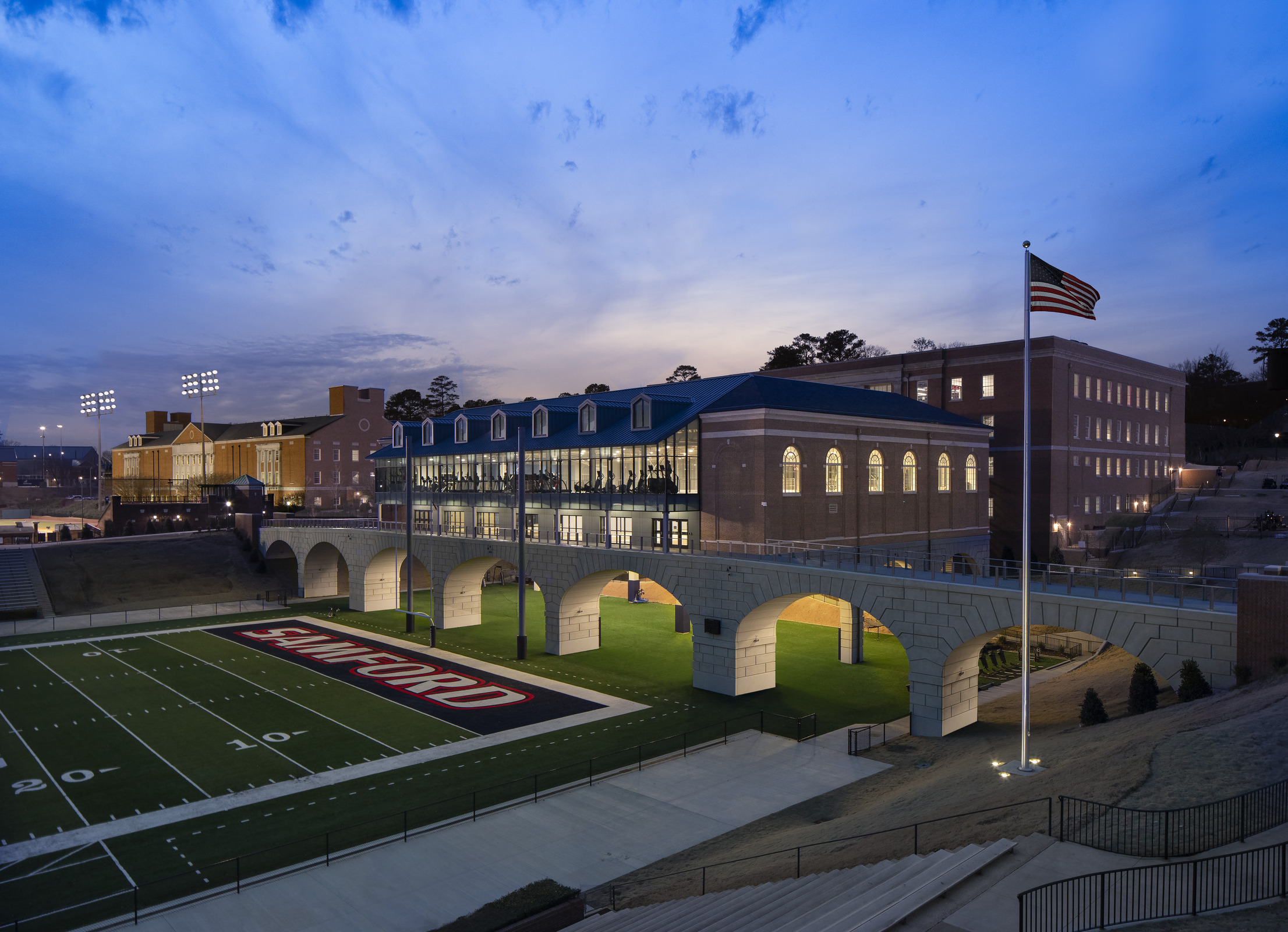
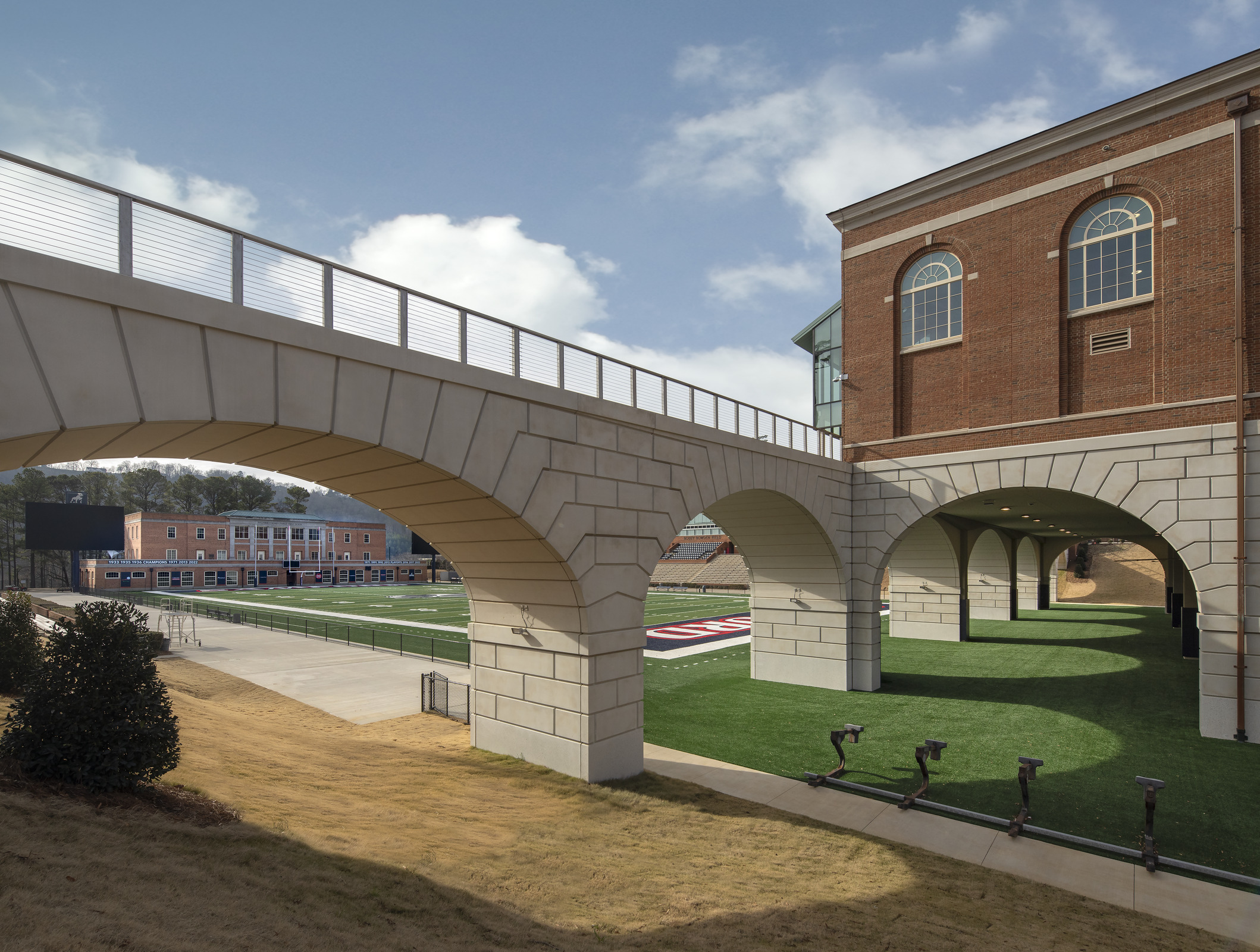
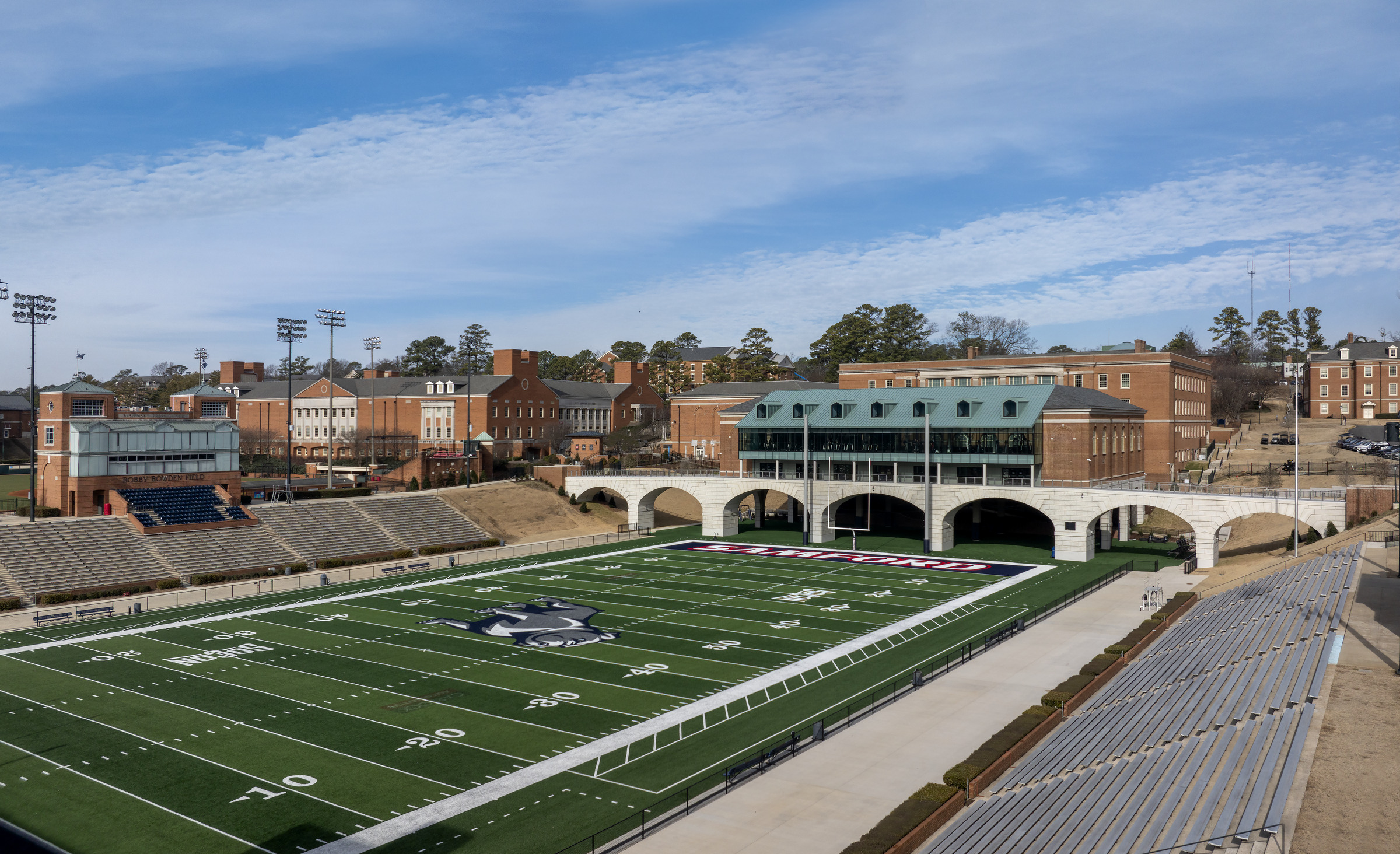
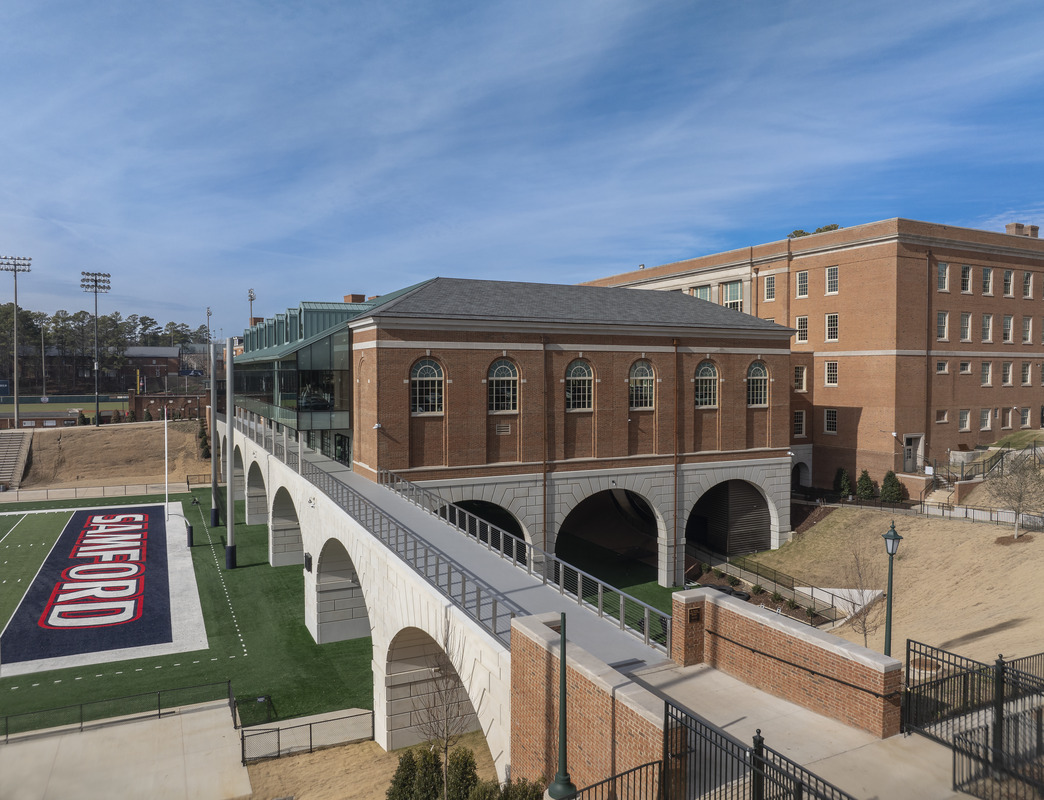
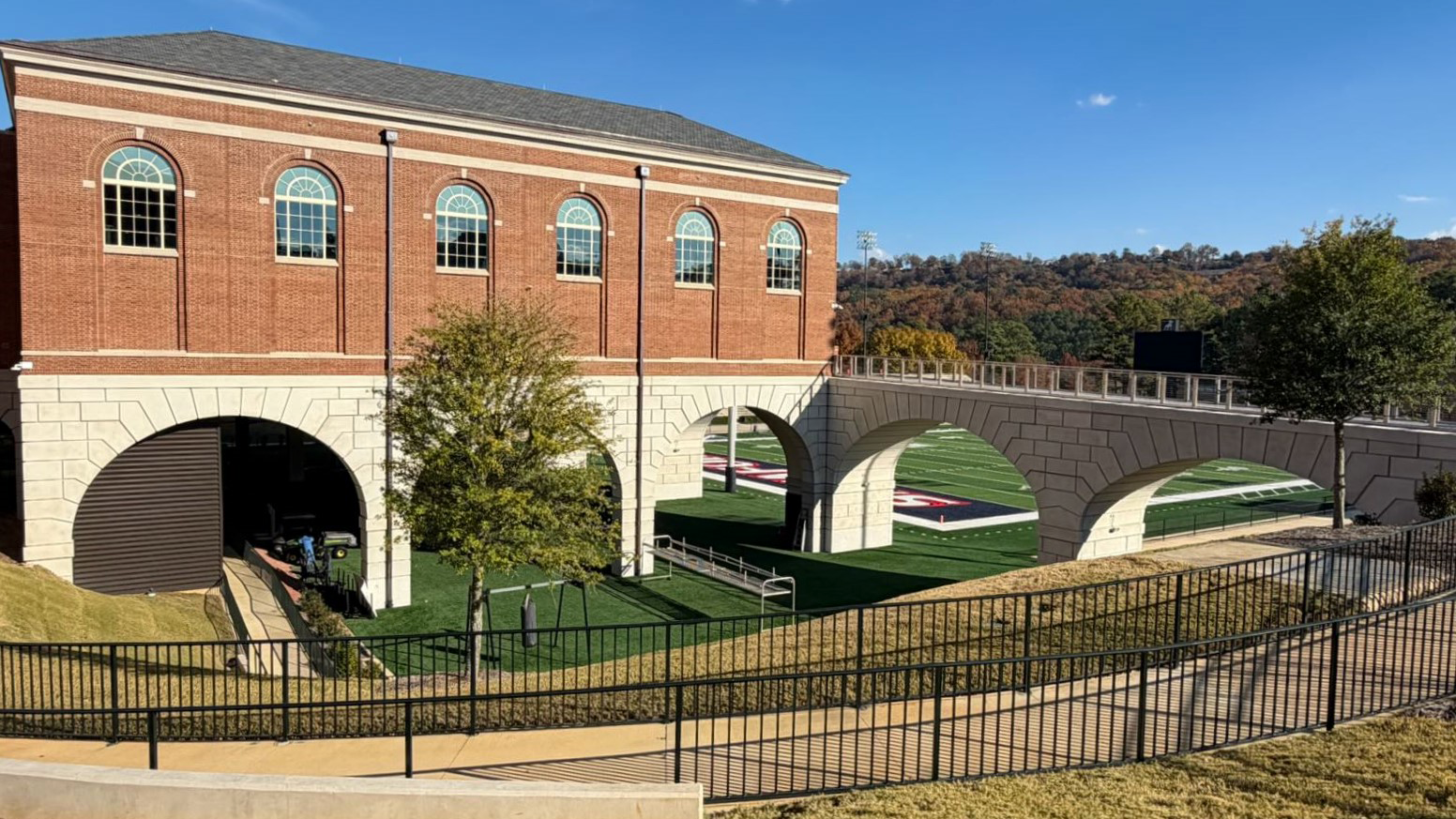
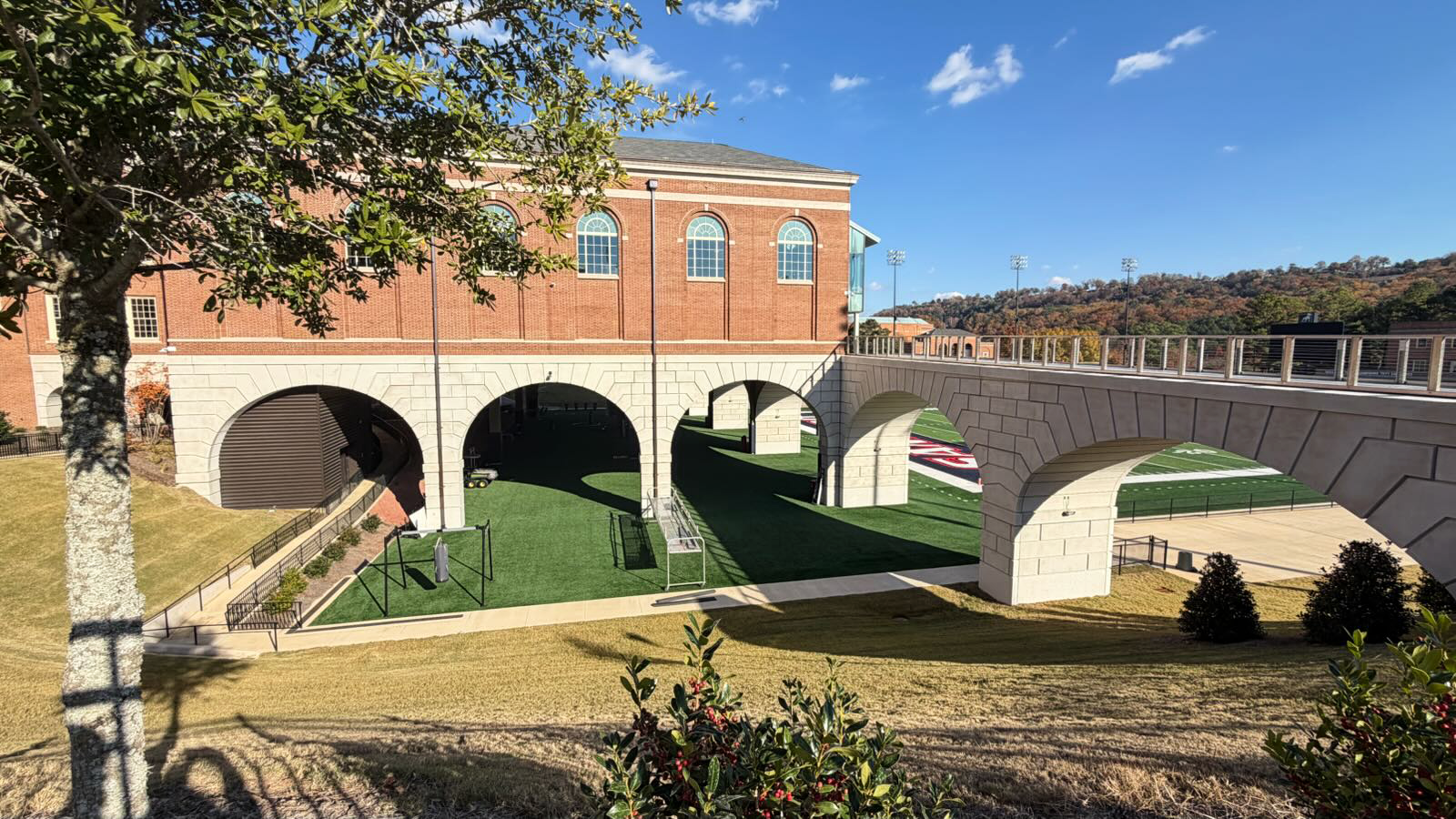
A defining architectural feature of the expansion is a pedestrian bridge spanning an active athletics field, connecting the recreation facility to the broader campus. Large prefabricated architectural panels form the multi-radius arches that support and frame the bridge, while coordinated vertical wall panels wrap the base of the new addition. Many of these panels interface directly with structural steel and cast-in-place concrete or are installed partially beneath the structure. Each element was detailed and installed with precision to maintain architectural continuity and deliver long-term durability in a high-traffic environment. Designed to echo the hand-laid limestone coursing found throughout campus, the precast components establish visual continuity and structural clarity, unifying new construction with historic surroundings.