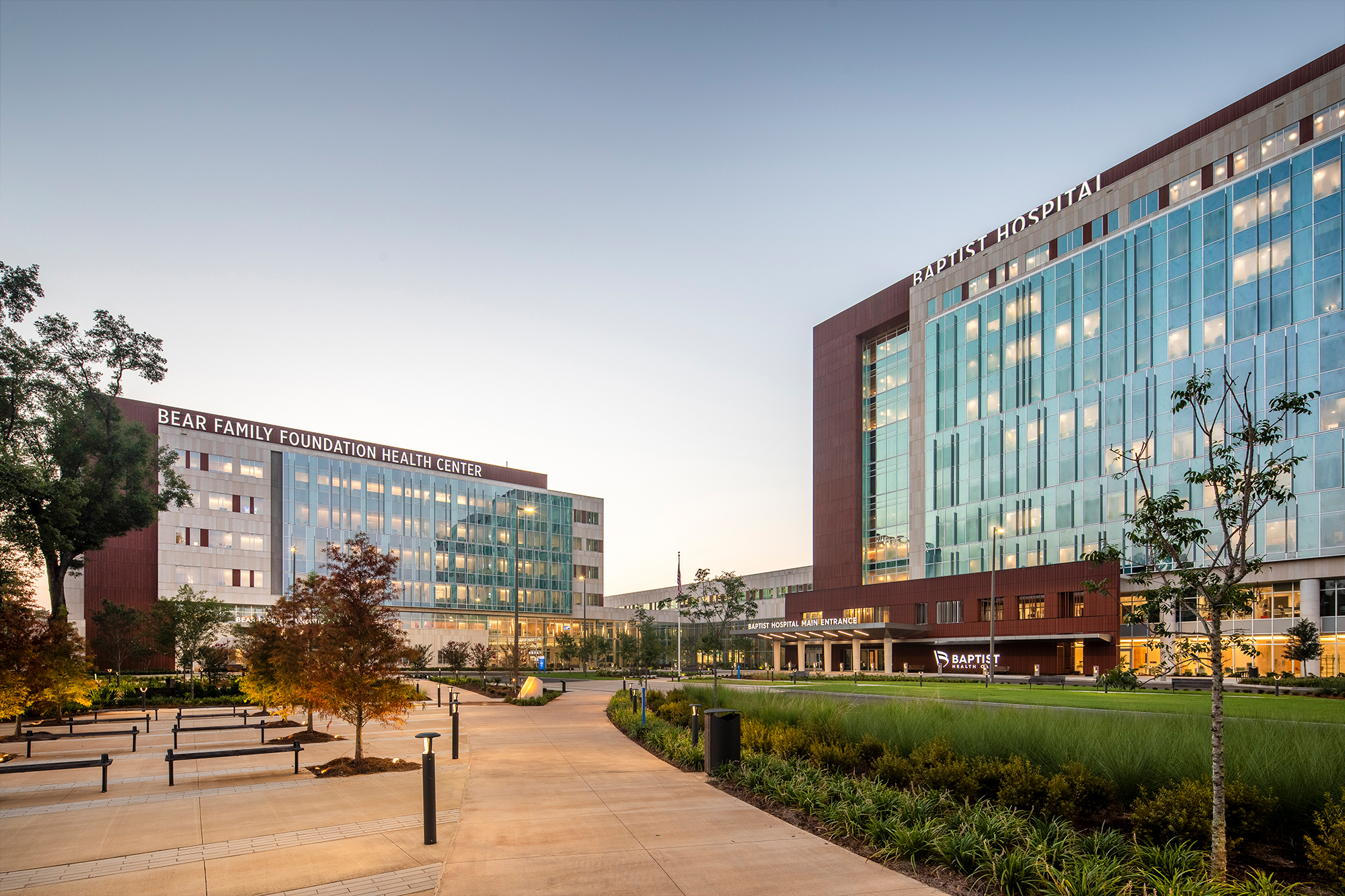
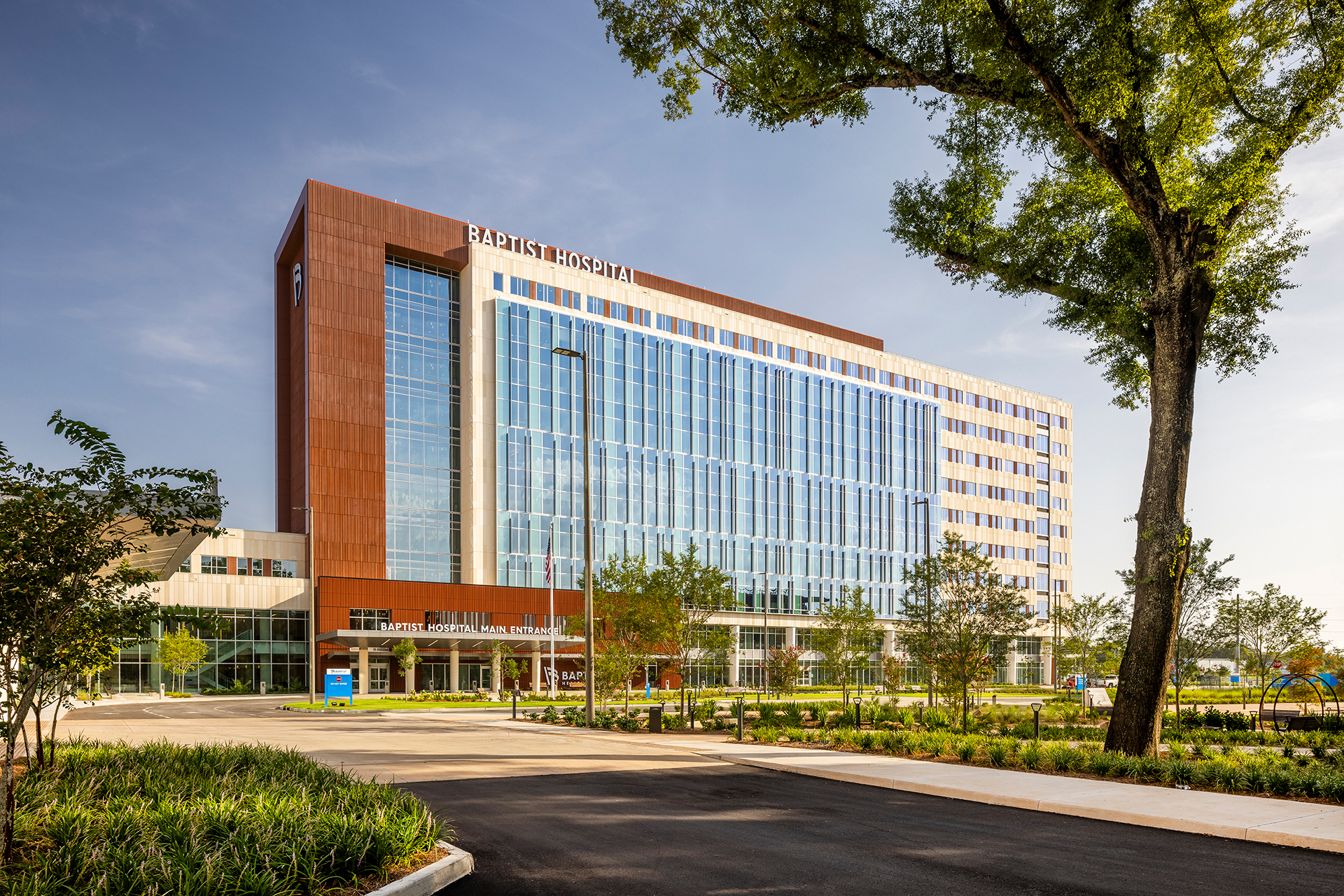
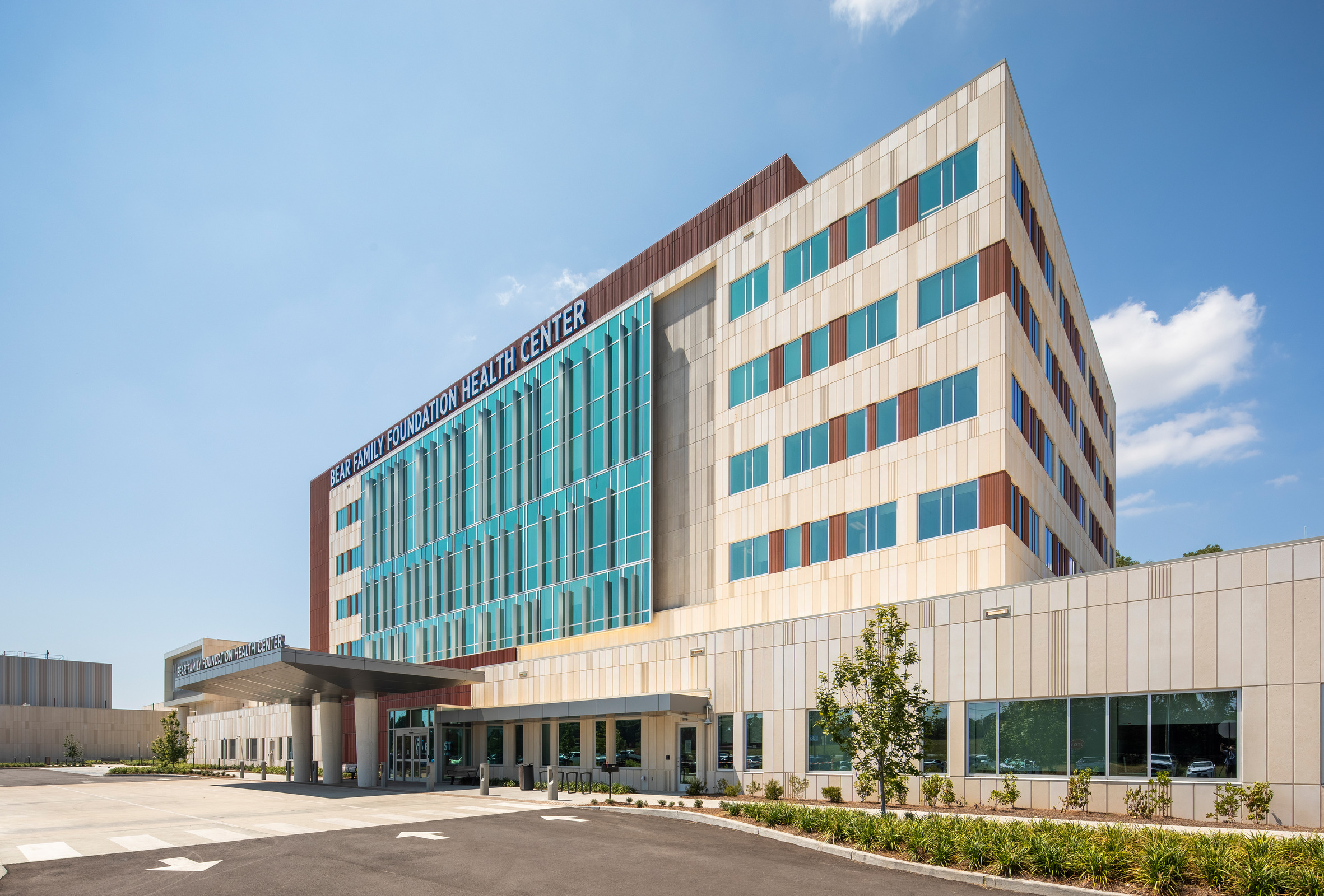
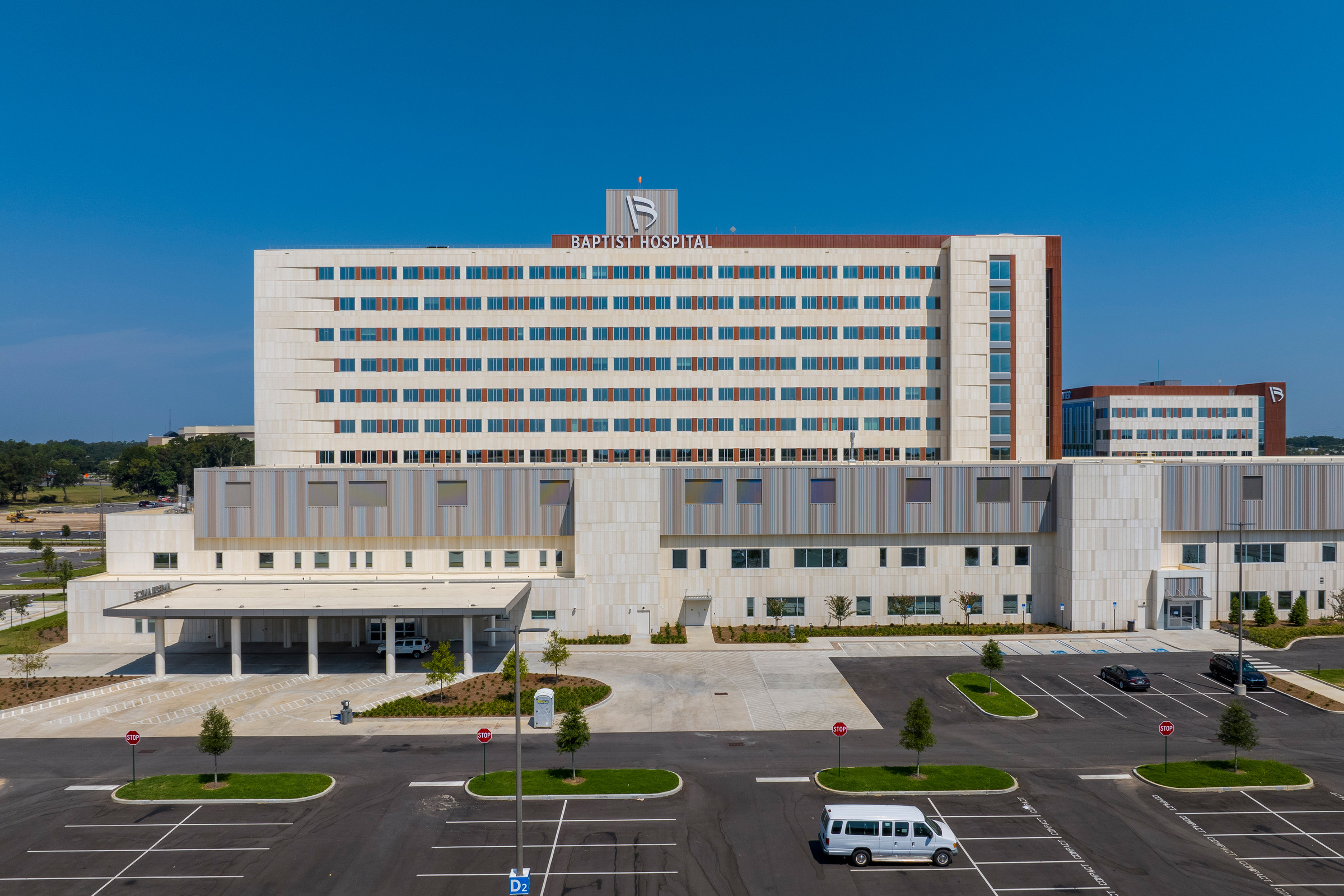
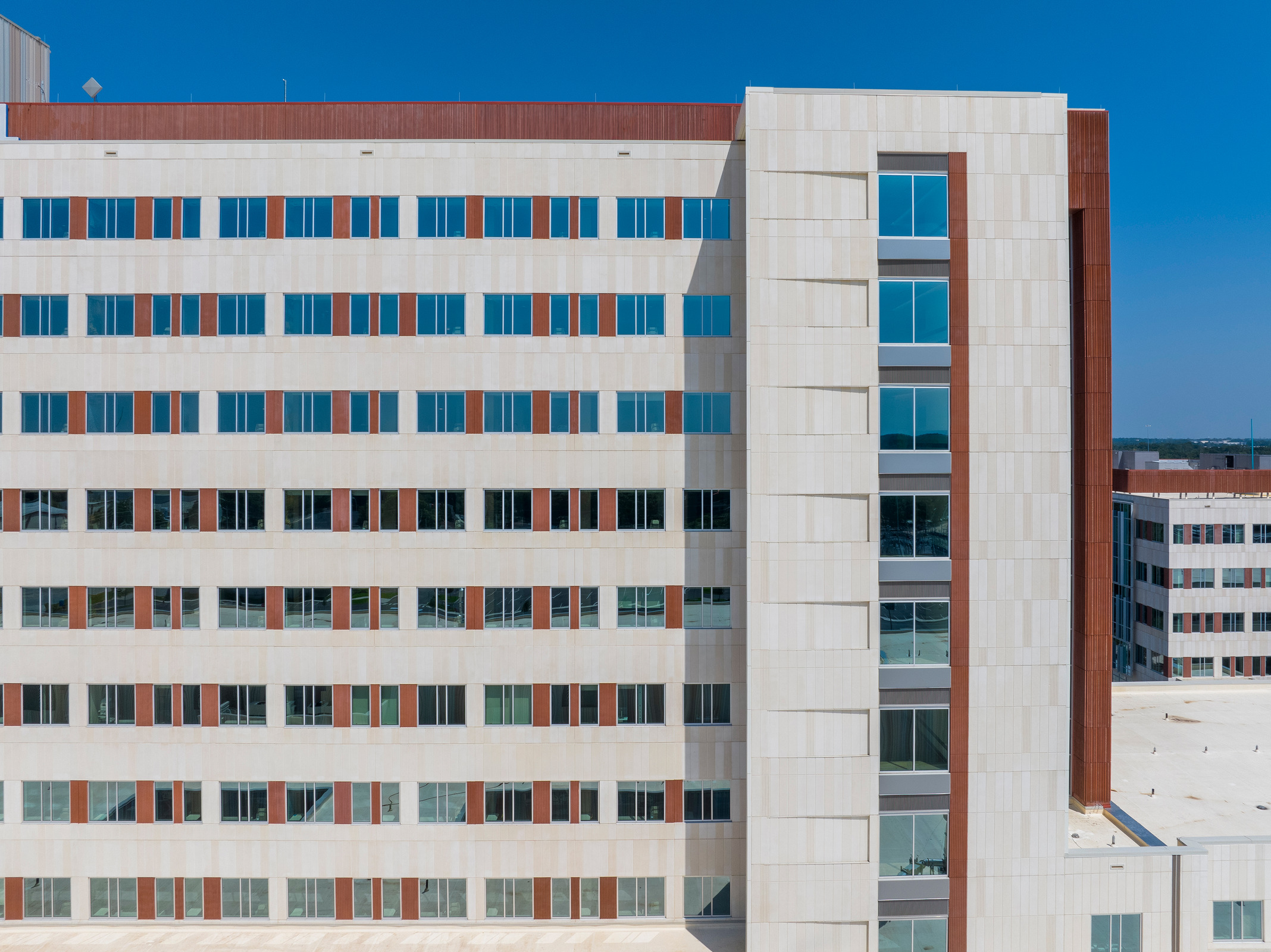
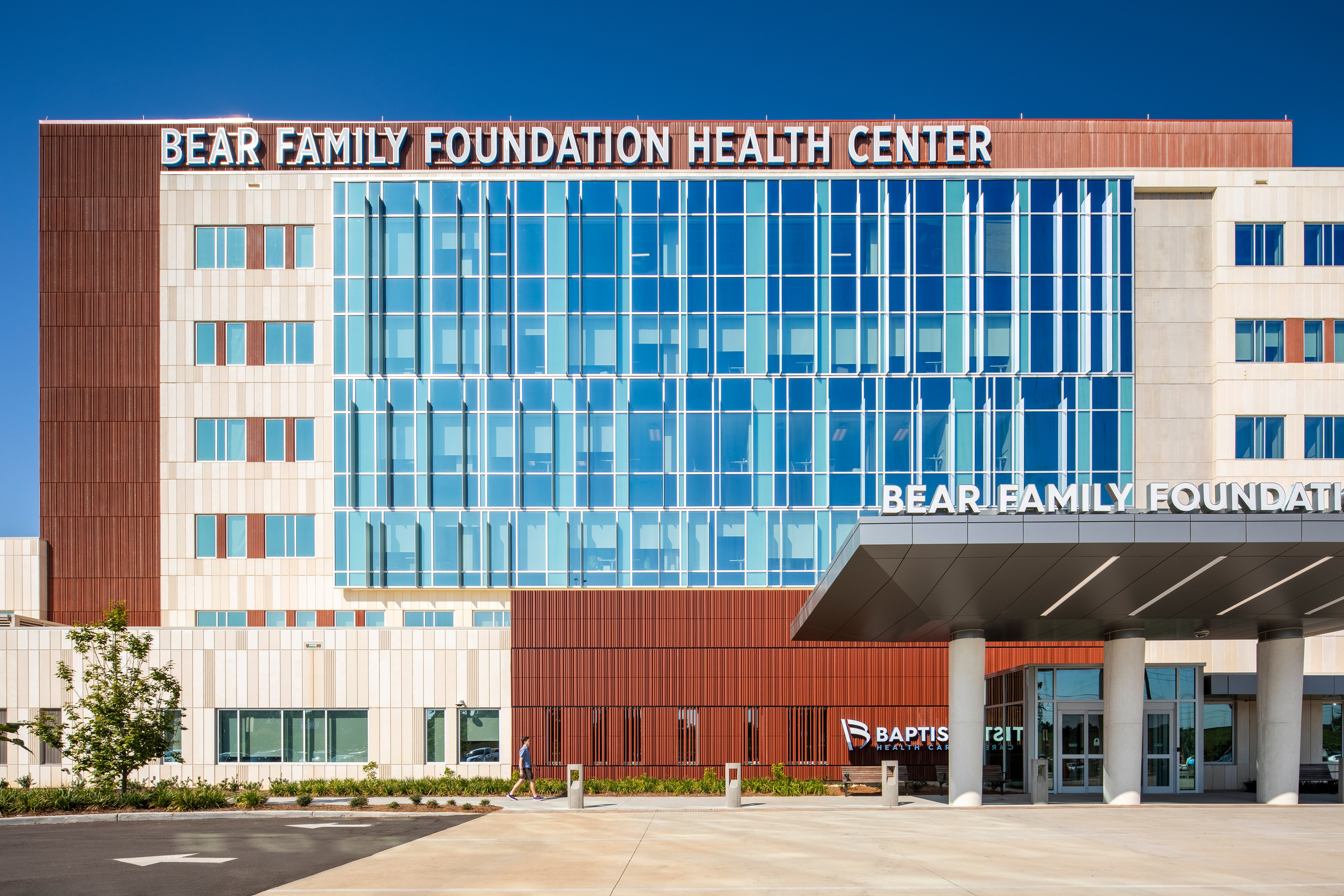
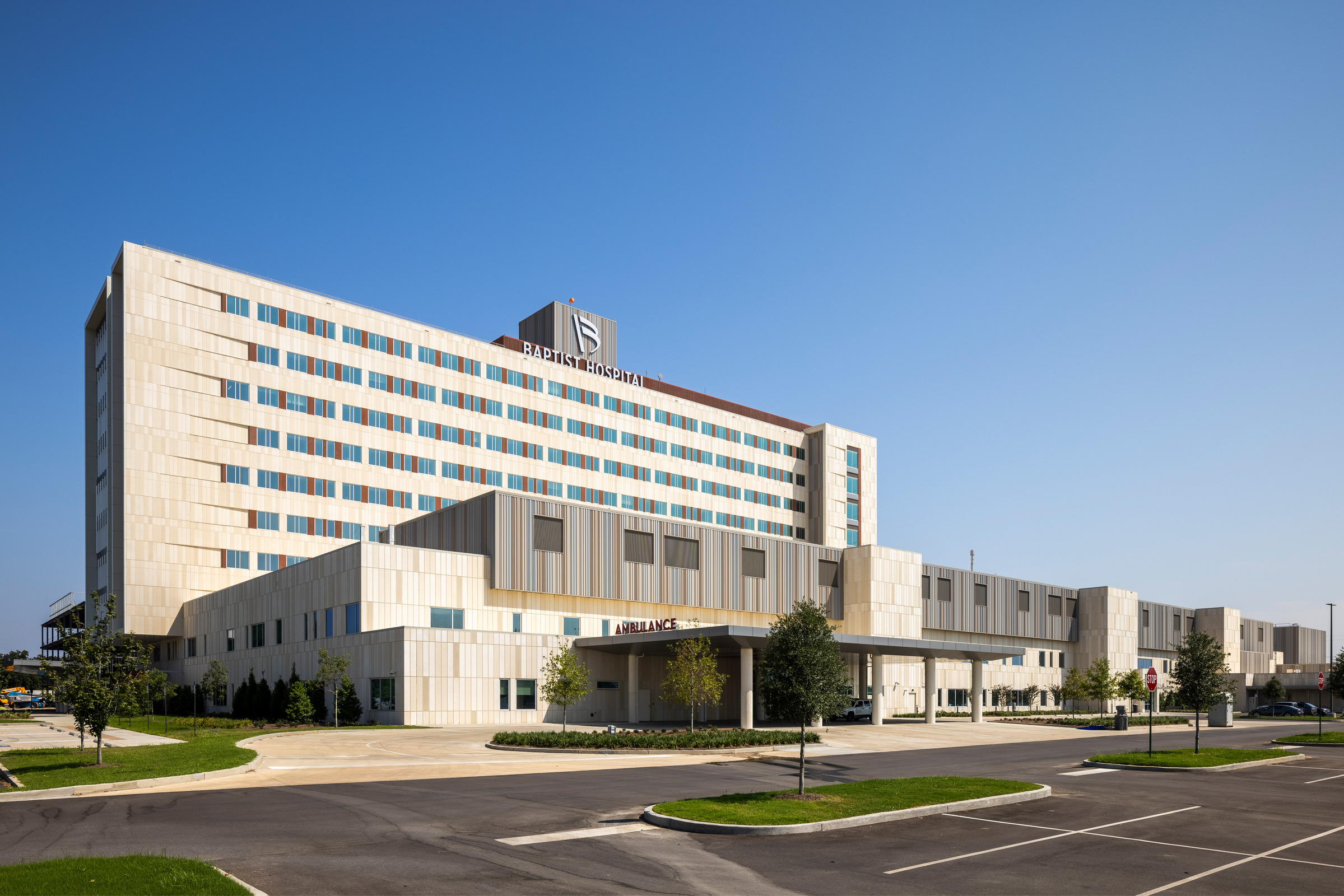
From the outset, the vision centered on resilience, sustainability and patient-focused care. Wells partnered with the design team to deliver integrated prefabricated facade systems that aligned architectural expression with constructability and performance. The towers feature GateLite, Wells’ unitized, resilient facade system, while the podium levels utilize a complementary prefabricated cladding approach. Together, these coordinated systems provided design flexibility and supported a layered material palette inspired by natural patterns — wind-swept sand, shifting clouds and filtered light — creating texture and depth while meeting rigorous durability standards.
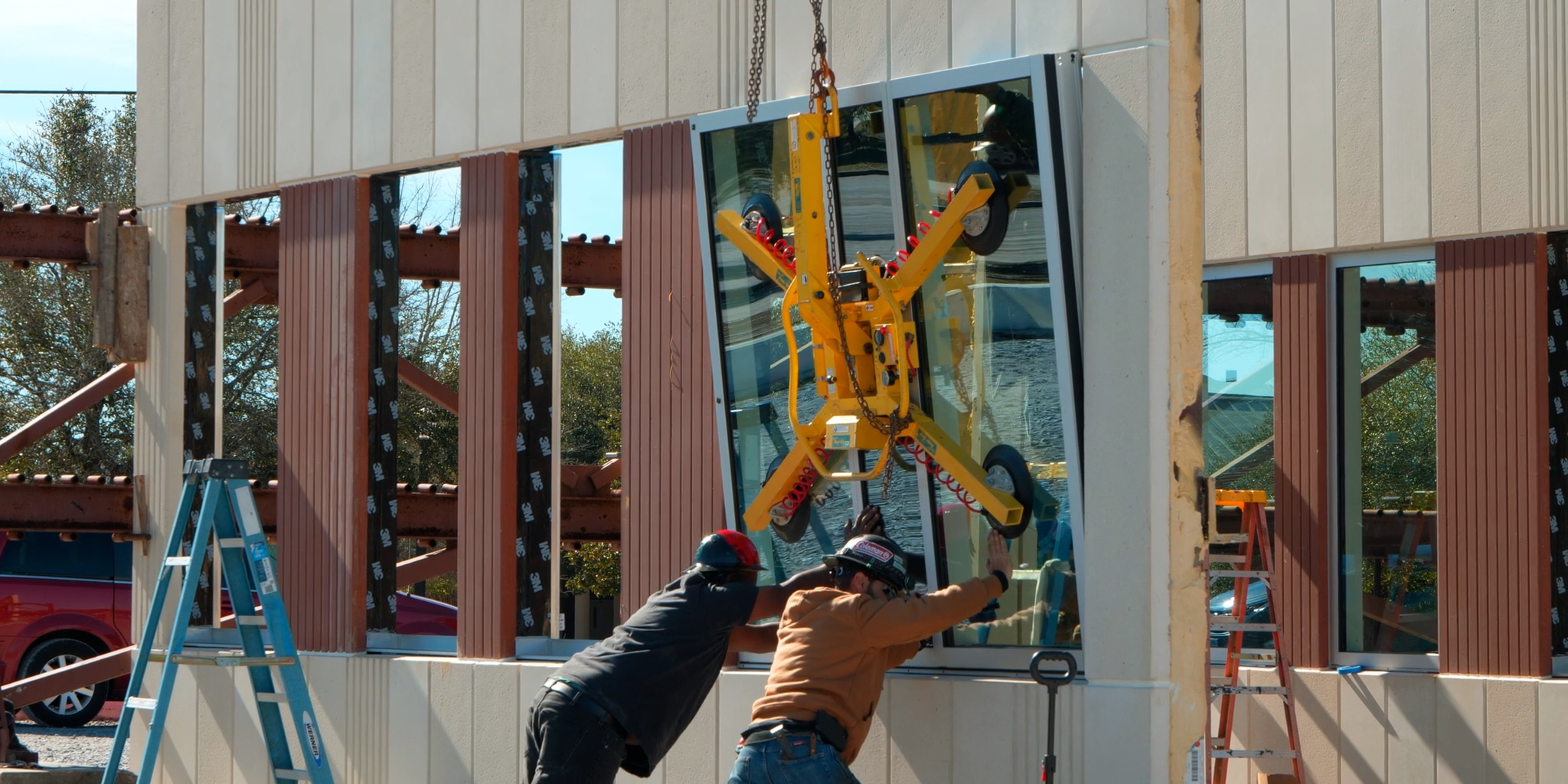
Off-site construction played a critical role in advancing both schedule and sustainability goals. With integrated glazing, continuous insulation and complete air and vapor control layers, the facade system forms a high-performing thermal envelope. Pre-glazed panels accelerated enclosure, reduced on-site trade stacking and shortened the overall construction timeline by five months, while minimizing waste and site disruption. The use of Type 1L cement further reduced embodied carbon in key elements, contributing to measurable environmental impact reduction.
Resiliency was paramount given the campus’s location within a hurricane-prone region. The facilities are designed to remain operational during extreme events — capable of withstanding a 1,000-year storm, Category 5 hurricane conditions and wind velocities up to 200 mph, while supporting up to seven days of off-grid capacity. Through disciplined engineering and coordinated execution, Wells helped deliver an exterior envelope engineered for strength, longevity and continuous operation.
By integrating prefabrication, sustainability strategies and performance-driven design, Wells delivered a healthcare campus built to serve its community through both everyday care and extraordinary conditions — setting a strong foundation for decades of impact in Northwest Florida.